Cyberbullying Awareness
Conceptual e-learning course designed to help parents navigate online safety and protect their teenagers from cyberbullying.
The Challenge
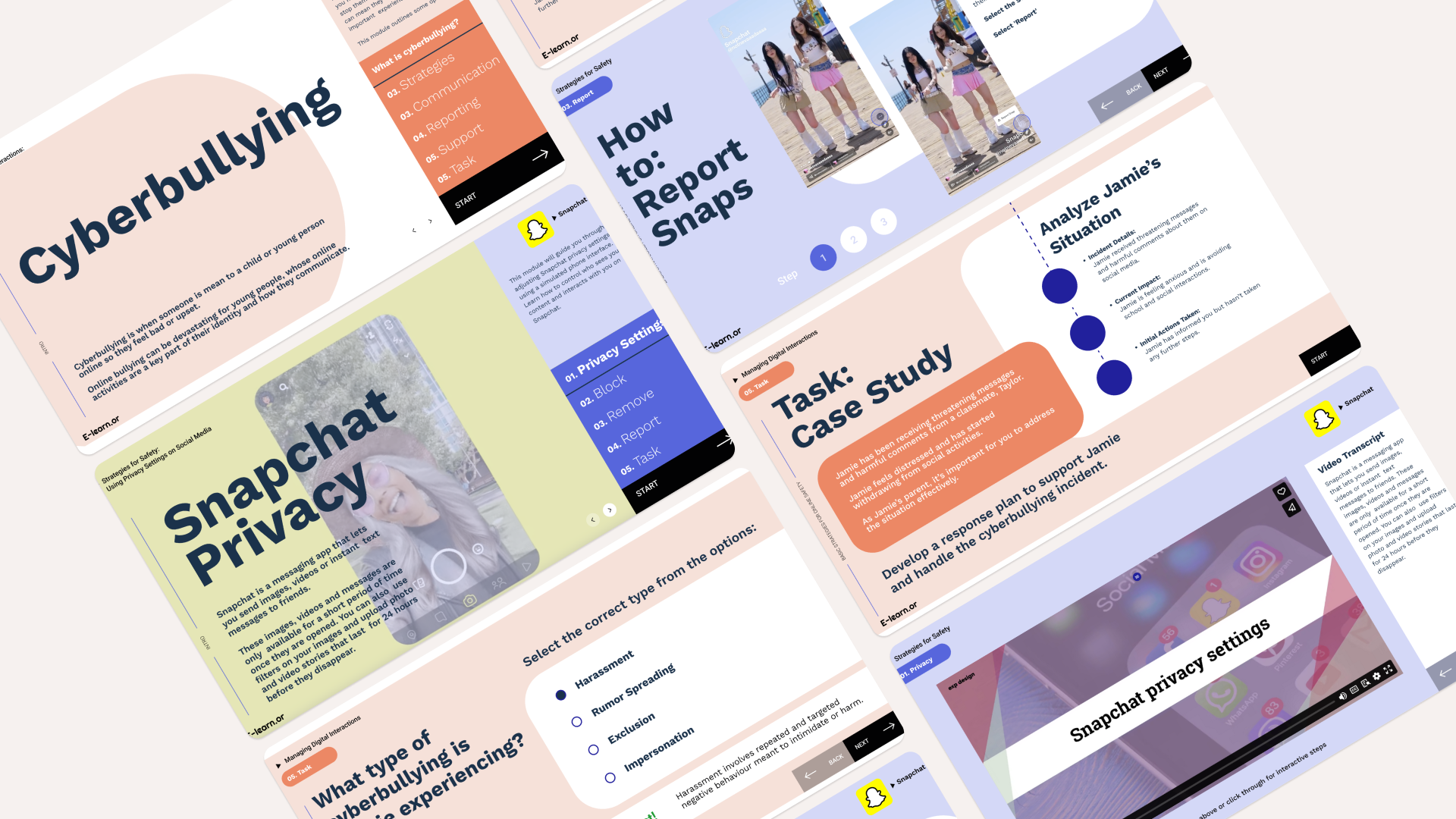
Parents of teenagers often feel unprepared to guide their children through the complexities of online safety. With teens regularly using platforms like Snapchat, TikTok, and Instagram, parents need accessible tools to understand these technologies and protect their children from cyberbullying, privacy violations, and digital footprint risks.
The Solution
Designed a conceptual online safety course specifically targeting parents of teens. This modular course was designed to be engaging, self-paced, and accessible across devices. The course focuses on:
- Simplified Learning Modules: Explained online risks and privacy issues clearly
- Interactive Tutorials: Simulated real-world app actions like adjusting Snapchat privacy settings
- Scenario-Based Learning: Engaged users with realistic problem-solving exercises
Research
- Parent Needs: Identified a gap in easy-to-use resources for teen-specific challenges like cyberbullying, privacy settings, and digital footprints
- Popular Platforms: Analysed apps frequently used by teens, including TikTok, Snapchat, and Instagram
- E-learning Best Practices: Studied effective instructional design principles and accessibility standards (WCAG)
Key Screens
Understanding Online Safety for Teens
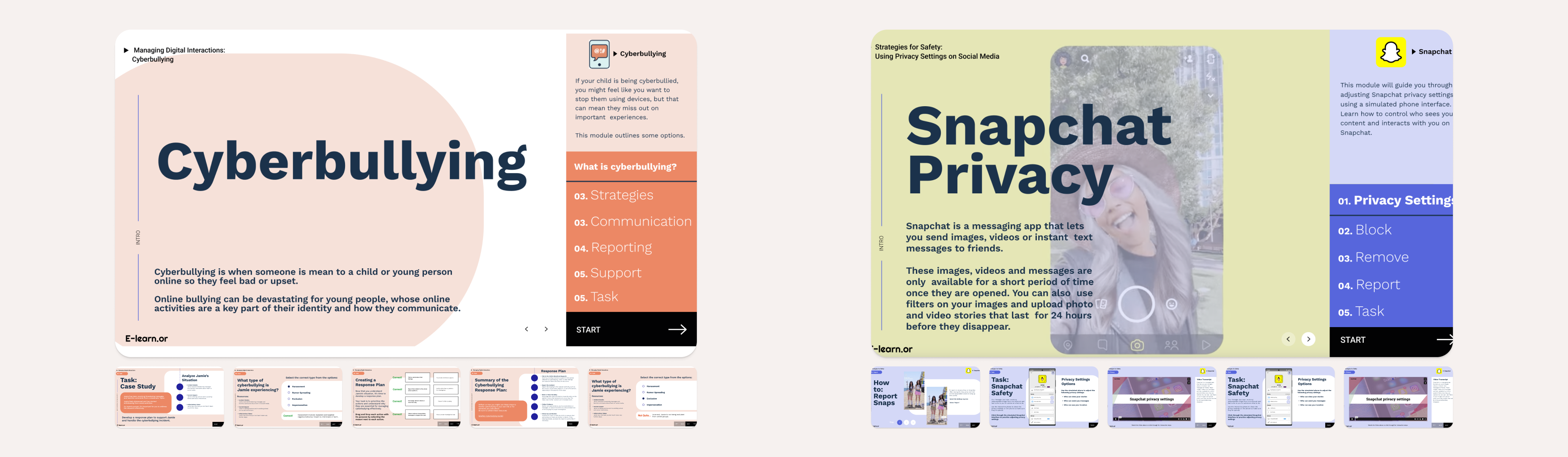
This module introduced parents to the challenges teens face online, featuring clear, actionable steps for fostering safe digital habits. The design prioritised clarity and simplicity.
Snapchat Privacy Settings Tutorial
Parents practised navigating a simulated Snapchat interface, adjusting privacy settings to secure their teen's account. The interactive tutorial provided hands-on experience.

Cyberbullying Scenario — Jamie's Story
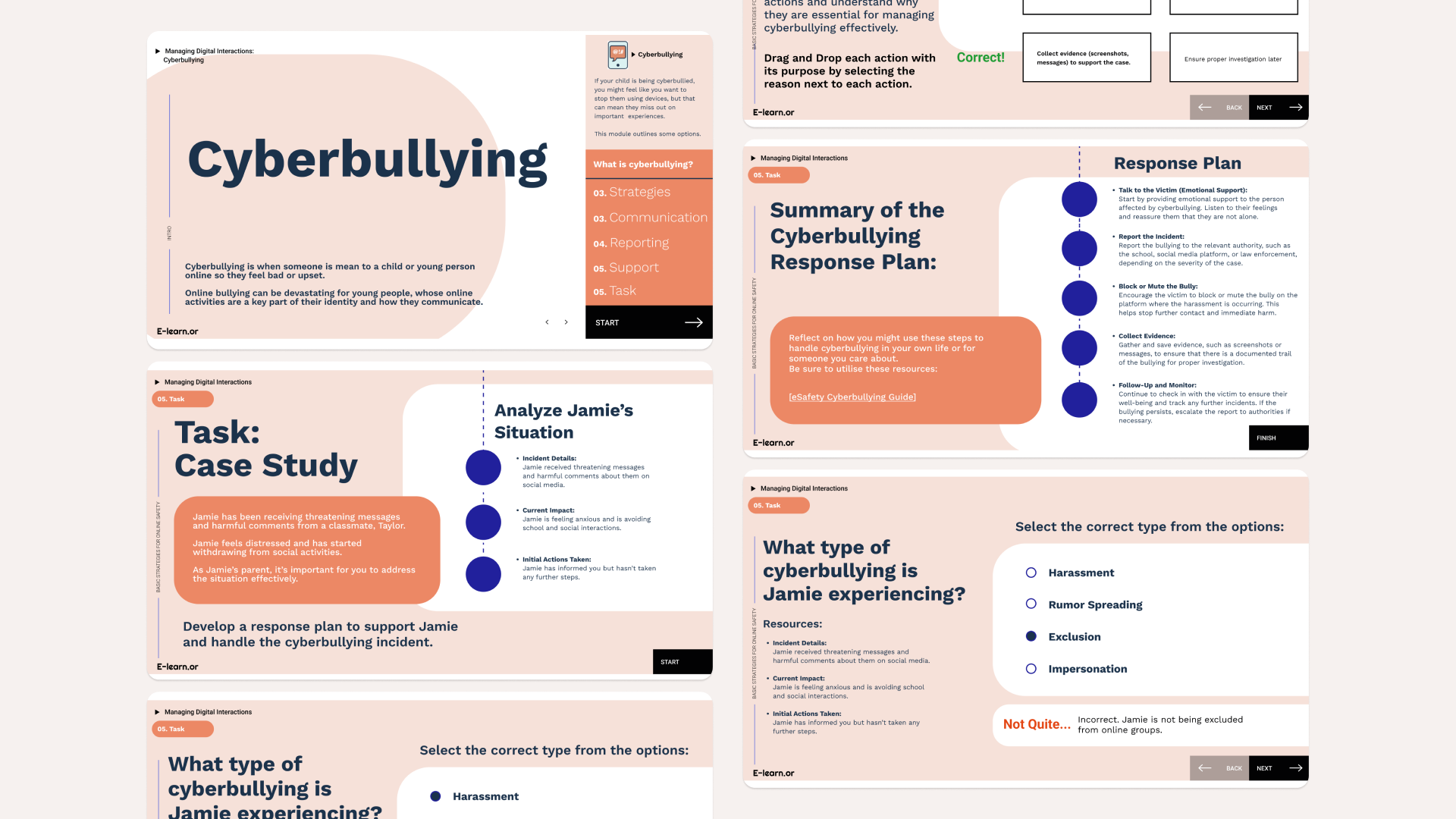
This scenario-based activity guided parents through addressing a cyberbullying incident. Parents followed the story of a teen, Jamie, who faces online harassment and made decisions on how to approach the situation, emphasising communication, support, and reporting tools.
Process
1. Content Design
The course was divided into three core learning modules:
- Understanding Online Safety for Teens: Fundamentals of online risks, privacy concerns, and teen behaviour in digital spaces
- Interactive Platform Tutorials: Step-by-step privacy settings and safety tools on Snapchat, TikTok, and Instagram
- Scenario-Based Activities: Role-playing exercises to practise identifying and addressing issues like cyberbullying and phishing
2. Prototyping
Using Figma, developed high-fidelity mockups including interactive screens for privacy setting walkthroughs and scenario simulations, with built-in feedback mechanisms providing immediate insights on user choices.
3. Accessibility & Visual Design
- Clear, legible typography and high-contrast colours
- WCAG-compliant layouts with alt-text, captions, and transcripts
Results
While conceptual, the final deliverable featured high-fidelity designs of all key e-learning activities, a practical focus on realistic applications for online safety, and an inclusive interface accommodating a diverse range of users.